
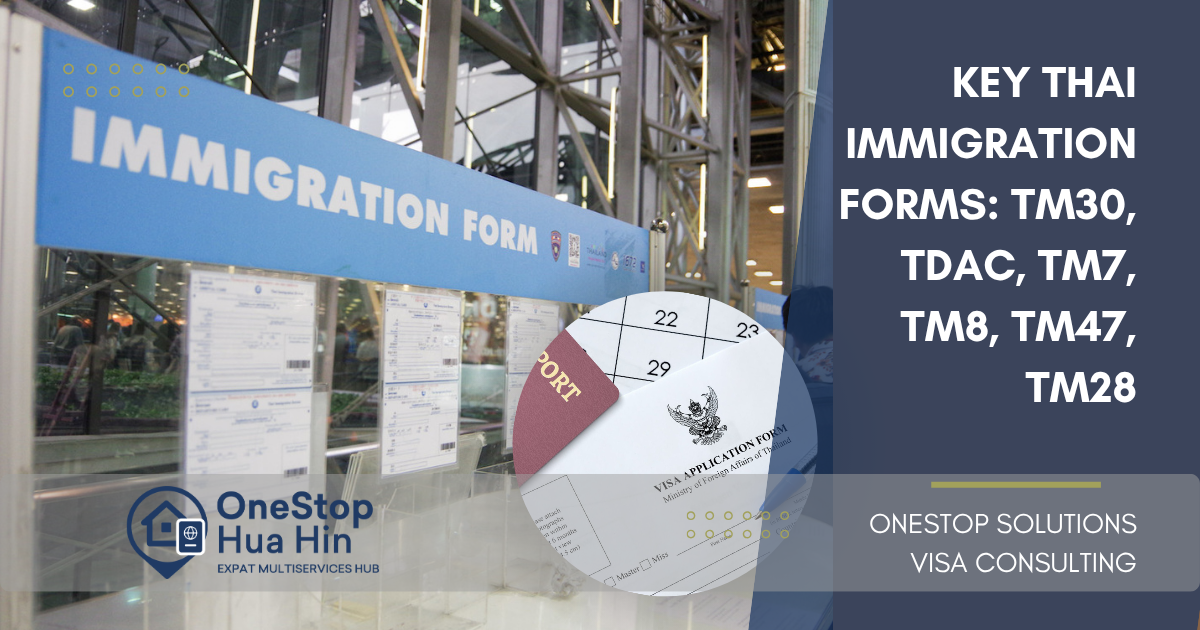
Key Thai Immigration Forms: TM30, TDAC, TM7, TM8, TM47, TM28
Introduction
When living, traveling, or working in Thailand, navigating immigration rules can be challenging. Among the most critical parts of staying compliant is knowing which immigration forms to file, when, and by whom. In this article, we explain Thailand immigration forms such as TM30, TDAC, TM7, TM8, TM47, and TM28. We’ll clarify their functions, filing requirements, and pitfalls to avoid. For those needing hands-on support in Hua Hin, Onestop Hua Hin offers expert assistance with immigration and visa services (visit their site at Onestop Hua Hin).
⸻
Overview of Key Thai Immigration Forms
Form Name / Purpose Who Files When / Validity Key Notes & Penalties
TDAC Thailand Digital Arrival Card (replaces TM6) Every non-Thai entrant Before arrival / entry Mandatory from 1 May 2025; delays or extra scrutiny if missing
TM30 Notification by house owner/operator Landlord or property owner (or proxy) Within 24 hours of a foreigner’s arrival or change of address Required even for private homes. Failure may jeopardize visa extension.
TM7 Application for extension of temporary stay The foreign national When applying to extend visa / permit Used for tourist, non-immigrant, retirement or marriage visa extensions. Fee approx. THB 1,900
TM8 Re-entry permit into Thailand The foreign national Before leaving Thailand (if you wish to return) Single or multiple re-entry. Without it, returning may void your visa.
TM47 Notification of stay over 90 days (90-day report) The foreign national Every 90 days during long-term stay Must report within time window; late report may incur fines (~THB 2,000)
TM28 Change of address (or stay in another province >24 h) The foreign national / property owner When foreigner moves province or stays > 24 h outside registered address Helps maintain correct address record especially when doing visa renewals or 90-day reports.
Let’s unpack each form in more detail.
TDAC – Thailand Digital Arrival Card
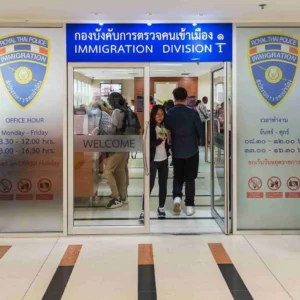
The Thailand Digital Arrival Card (TDAC) is the newer digital version of the former TM6 (arrival / departure card). All non-Thai nationals entering Thailand must complete the TDAC ahead of arrival, regardless of visa status.
Failing to complete TDAC before entry can lead to delays at immigration control. The system also allows Thai authorities to screen arrivals and collect data on entry and stay.
⸻
TM30 – Notification by House Owner / Residence Report
The TM30 form is a long-established requirement under Thai immigration law. Its core purpose is to notify immigration of where a foreign national is staying.
Who must file?
Typically the landlord, house owner, or manager must submit TM30 within 24 hours of the foreigner’s arrival. In some cases, a proxy or the occupant may do it (with proper authorization).
It applies not only to hotels but to private residences, condos, and rented homes.
When / how often?
•If a foreigner moves to a new address (especially across provinces), a new TM30 is required.
•Returning to Thailand from abroad may also necessitate a fresh TM30.
Risks or penalties
If TM30 is not filed or handled incorrectly, immigration may deny visa renewals or extensions.
⸻
TM7 – Extension of Temporary Stay
The TM7 form is used to request an extension of one’s permitted stay in Thailand. It is broadly used for various visa categories (tourist, non-immigrant, retirement, marriage, etc.).
Key points
•The fee is around THB 1,900 (though may vary by office).
•You fill in your passport info, existing visa status, reason for extension, intended duration, and address among other details.
•Some offices allow extensions of 7, 30, 60, 90, or 365 days depending on visa type.
Because immigration rules can differ across provinces, it’s wise to confirm with the local immigration office (or engage a service like Onestop Hua Hin) to ensure you submit correctly.
⸻
TM8 – Re-entry Permit
If you are in Thailand on a visa or extended stay and you plan to exit and re-enter Thailand, you often need a re-entry permit. That’s what TM8 is for.
Without TM8, leaving the country may void your current permit or visa.
There are two major types: single re-entry and multiple re-entry. The cost for multiple re-entry is higher.
⸻
TM47 – 90-Day Report (Notification of Stay Over 90 Days)
One of the most important recurring obligations for foreign residents is the TM47 form, also known as the 90-day report.
What it is and who files
Every foreigner holding a long-term visa or extension (non-immigrant, retirement, marriage, work visa, etc.) must notify immigration of their residence every 90 days.
How to file
You can file in person at local immigration, via mail, or via an online system (TM47 web portal) in many provinces.
Allow a 7 days before / 15 days after window to file.
Penalties
If you miss the deadline, fines (e.g. THB 2,000) may apply.
⸻
TM28 – Change of Address / Stay in Other Province
The TM28 form concerns notifying immigration when a foreigner moves address, or stays overnight in another province for more than 24 hours than their registered address.
This ensures that your address records stay accurate, which is important when later filing TM47 or visa renewals.
⸻
Tips to Stay Compliant
1.Keep all receipts / stamps — always obtain the acknowledgement when you file any form.
2.Use proxies wisely — if the property owner submits TM30, ensure they provide you a signed proxy.
3.Watch your 90-day windows — set reminders for TM47 every quarter.
4.Re-check local rules — immigration practices may differ across provinces.
5.Get expert help — firms like Onestop Hua Hin can guide your filings, reduce mistakes, and streamline the process.
⸻
External Resources & Further Reading
•Official Thai Immigration Bureau site — for form downloads and announcements
•Thai Embassy’s guide on TM30 and 90-day reporting
FAQs
Q1: Do I personally file TM30, or is it always the landlord’s duty?
Generally, the landlord or property owner is responsible for submitting TM30. However, in practice, some landlords delegate this or sign a proxy so you can file it. Always ensure the registration has been done.
Q2: How often must I file TM47 (90-day report)?
Every 90 days for foreign nationals with a long-term visa or extension.
Q3: Can I skip TM8 if I only leave Thailand for a short trip?
No. If you leave without a valid re-entry permit via TM8, your visa or permit may be voided upon return.
Q4: What if I change my address within the same city? Do I need TM28?
Yes, you should notify with TM28 when your address changes, especially across districts or if staying in a different province for >24 hours.
Q5: Are there fines for late TM47 filing?
Yes — typically a fine (for example THB 2,000) may apply if late.
Q6: Can immigration offices reject or refuse visa extensions if these forms are not in order?
Yes — missing or improper TM30, TM47, or other address records can complicate or cause refusal in visa renewal or extension.
⸻
Conclusion & Call to Action
Understanding and properly managing Thailand immigration forms like TM30, TDAC, TM7, TM8, TM47, and TM28 is vital for any foreigner residing or operating in Thailand. Mistakes or omissions can lead to fines, visa refusals, or legal complications.
If you’re in or around Hua Hin and require direct support, contact Onestop Hua Hin, your local one-stop destination for visa and immigration assistance. They can help you file forms correctly, avoid pitfalls, and ensure peace of mind during your stay in Thailand.
✅ Take the next step: Visit Onestop Hua Hin to schedule a consultation or service related to your visa and immigration needs.
